
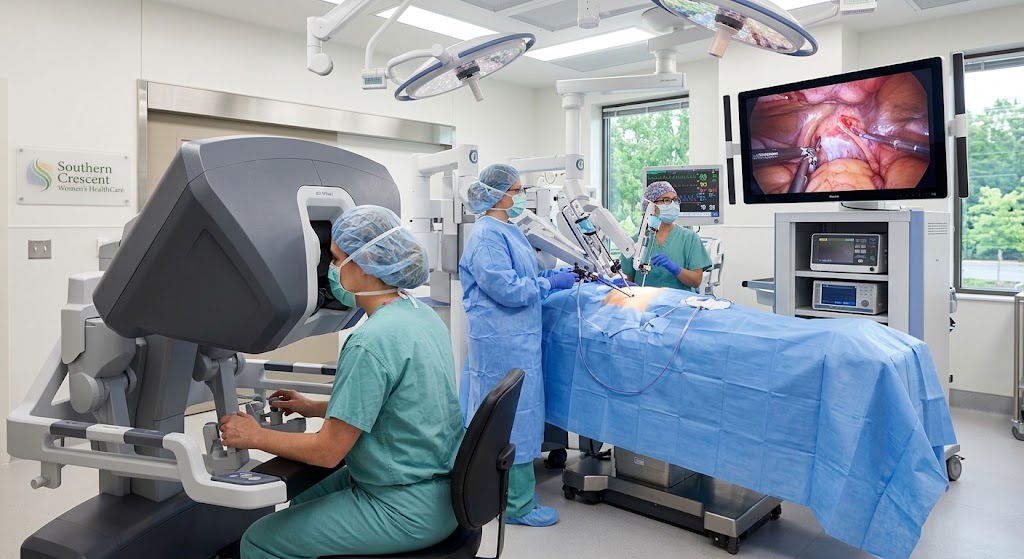
When conservative treatments no longer relieve chronic pelvic pain, heavy menstrual bleeding, or severe fibroid symptoms, surgery may be recommended. For many women, the prospect of traditional open surgery—along with large incisions, hospital stays, and weeks of non-work recovery time—can feel overwhelming.
Fortunately, modern surgical techniques have transformed women’s healthcare. At Southern Crescent Women’s HealthCare, our board-certified OB/GYNs specialize in minimally invasive gynecologic surgery (MIGS), giving women across Georgia safer surgical alternatives with smaller incisions, significantly less pain, and faster return to daily activities.
What Is Minimally Invasive Gynecologic Surgery?
Minimally Invasive Gynecologic Surgery (MIGS)
Minimally invasive gynecologic surgery encompasses advanced surgical methods—including laparoscopic, robotic-assisted, and hysteroscopic techniques—that allow surgeons to diagnose and treat conditions inside the pelvis through tiny keyhole incisions or natural access pathways rather than large abdominal cuts.
Conditions Treated with Minimally Invasive Surgery
Minimally invasive approaches can address a wide variety of benign gynecologic conditions, including:
- Uterine Fibroids: Non-cancerous growths that cause heavy periods, pelvic pressure, and frequent urination.
- Endometriosis: Tissue similar to the uterine lining growing outside the uterus, causing severe pelvic pain and fertility challenges.
- Ovarian Cysts: Fluid-filled sacs on the ovaries that require removal due to persistent pain or rupture risk.
- Chronic Pelvic Pain & Adhesions: Internal scar tissue formed from past infections, endometriosis, or prior surgeries.
- Abnormal Uterine Bleeding: Exceptionally heavy or prolonged periods that do not respond to medication.
Key Benefits of Minimally Invasive Procedures
Choosing a minimally invasive approach over traditional open surgery offers major physical and personal advantages:
- Smaller Incisions & Minimal Scarring: Procedures are performed through tiny incisions (typically 5 to 12 millimeters), resulting in faint, barely noticeable scars.
- Shorter Recovery Times: Most patients return to light activities within 1 to 2 weeks, compared to 6 to 8 weeks for open abdominal surgery.
- Outpatient Convenience: Many procedures allow you to return home the very same day, avoiding costly overnight hospital stays.
- Reduced Post-Operative Pain: Less surgical tissue disruption means lower post-procedure discomfort and reduced reliance on prescription pain medications.
- Lower Risk of Infection & Complications: Minimal exposure of internal tissues significantly reduces the likelihood of wound infections and blood loss.
Common Minimally Invasive Techniques We Offer
Depending on your specific diagnosis and medical history, your provider may recommend one of the following approaches:
1. Laparoscopic Surgery
A thin, lighted scope (laparoscope) equipped with a camera is inserted through a tiny incision near the navel. Specialized surgical tools are guided through 1–2 additional keyhole incisions to perform precise procedures like cyst removals or diagnostic evaluations.
2. Robotic-Assisted Surgery
Utilizing state-of-the-art robotic platforms, your surgeon operates highly precise, flexible instruments with 3D high-definition magnification. This technique provides unmatched dexterity in complex cases, such as removing deep endometriosis or large fibroids while preserving healthy tissue.
3. Hysteroscopic Surgery
A small telescope (hysteroscope) is passed through the cervix directly into the uterus without any external skin incisions. This technique is ideal for removing uterine polyps, small fibroids, or evaluating structural causes of abnormal bleeding.
Comparing Surgery Options: Traditional vs. Minimally Invasive
| Surgical Aspect | Traditional Open Surgery | Minimally Invasive Surgery (MIGS) |
| Incision Size | 4 to 8 inches across abdomen | Keyhole size (5–12 mm) or no external cut |
| Hospital Stay | 2 to 4 days inpatient | Same-day discharge (outpatient) |
| Recovery Period | 6 to 8 weeks | 1 to 2 weeks |
| Post-Op Pain Level | Moderate to Severe | Mild to Moderate |
| Scarring | Prominent abdominal scar | Minimal, faint scar lines |
What to Expect During Your Surgical Journey
From your initial consultation through post-operative care, our team guides you through every step:
- Comprehensive Evaluation: Detailed pelvic imaging (ultrasound or MRI) and lab work to determine the exact cause of your symptoms.
- Personalized Treatment Plan: Discussing conservative, non-surgical, and surgical choices to find the safest option for your lifestyle and reproductive goals.
- Pre-Operative Preparation: Clear guidelines on pre-procedure nutrition, medication adjustments, and day-of-surgery arrival.
- Post-Operative Support: Customized pain management strategies, wound care instructions, and follow-up appointments to monitor your recovery.
Consult with the Experts at Southern Crescent Women’s HealthCare
If chronic pelvic pain, heavy bleeding, or fibroids are impacting your quality of life, you do not have to settle for traditional open surgery with long downtime. The experienced OB/GYN team at Southern Crescent Women’s HealthCare is dedicated to providing advanced, compassionate, and minimally invasive options tailored to your needs.
Take the first step toward relief and a faster recovery.
Contact Southern Crescent Women’s HealthCare today to schedule a surgical consultation at one of our convenient practice locations in Fayetteville, Stockbridge, or Newnan.